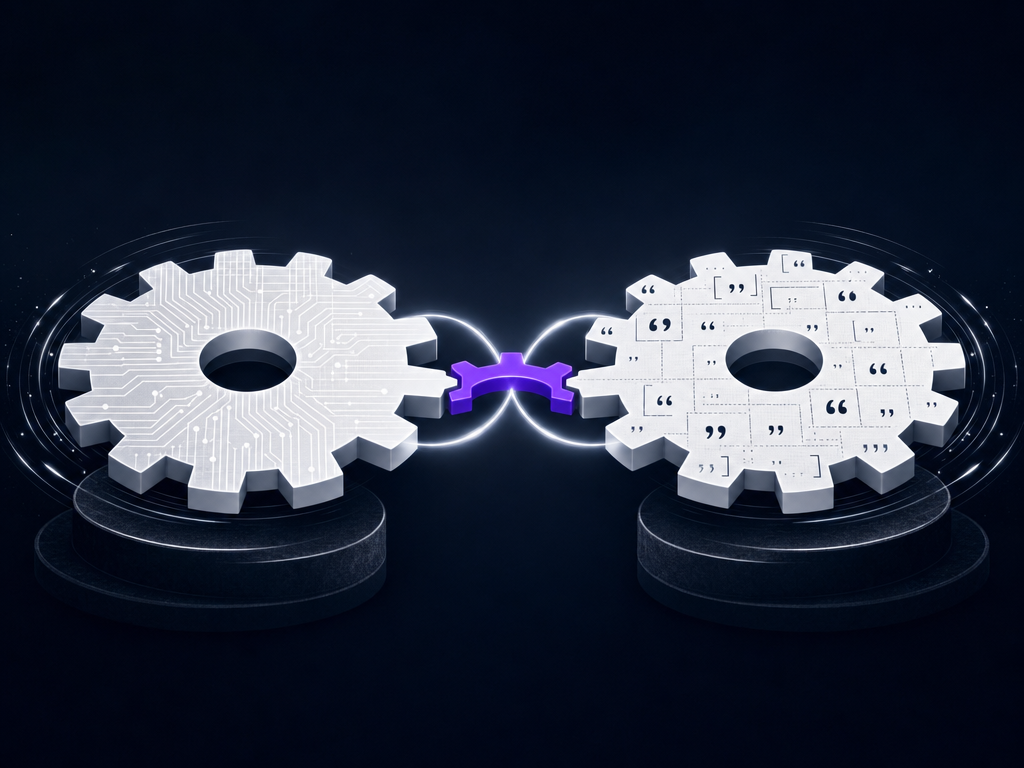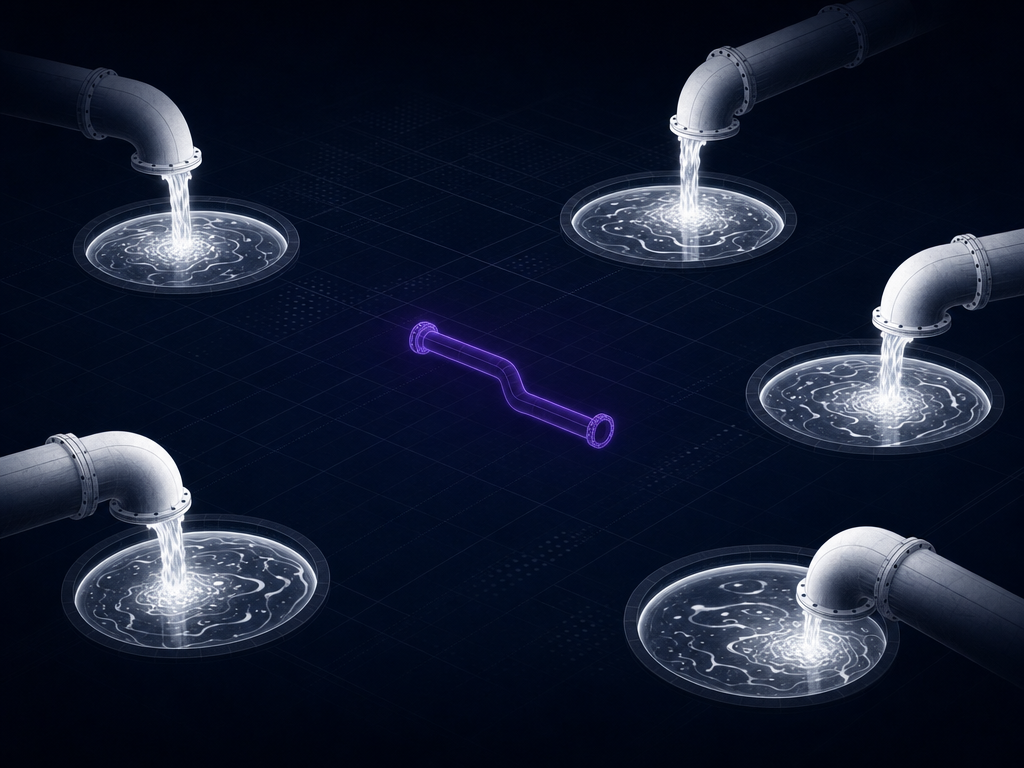

Marketing channels compound when the output of one channel becomes a learning input for another. That requires feedback loops at the data layer, not a shared report. Compounding is an operational problem, not a dashboard problem. At Thribewave we run ads, AEO content, local search, and chatbots under one team with one strategy, and the difference between compounding and merely coexisting shows up in how data moves between those channels, not in how it gets summarized.
The Fragmented Stack Problem Most Businesses Live With
A fragmented stack produces five channels that each perform to their own number while knowing nothing about each other. The ads agency optimizes click cost. The SEO vendor chases rankings. The social manager posts on a calendar. The chatbot runs on a script nobody has revisited. The local listings sit with whoever set up the Google Business Profile. Each one does its job. None of them learns from the others.
This is the setup most businesses live with, because most agencies sell channels as separate line items. You hire the ad shop, then the content shop, then someone for social, then a chatbot vendor. Every one of them delivers a report. Every report looks fine in isolation. And the business owner is left stitching together a story across five inboxes, trying to figure out why the whole thing feels like it costs more than it returns.
The problem is not the people. The ad shop may be excellent. The problem is that the ad shop never sees the questions real prospects type into the chatbot, so the ad creative keeps guessing at language the chatbot could have handed it. That is wasted effort, and it is structural.
Integration Is Not Compounding (And Why That Distinction Matters)
Integration means your channels report into one place. Compounding means your channels feed one another. These are not the same thing, and conflating them is the mistake that lets a business believe it already has what it does not have.
Integration is a reporting property. Your Meta Ads numbers, your organic traffic, your call volume, and your chatbot sessions all land in one dashboard. Useful for the Monday meeting. But a shared dashboard does not move a single signal from one channel into another. The ads still do not know what the chatbot learned. The content still does not know what prospects actually ask. Everything is visible in one view and still isolated at the data layer.
Here is the pushback the industry needs to hear: integration is not one report. The convention that "integration equals one report" is exactly what lets vendors bundle services, hand you a unified dashboard, and call the job done. A report is an output. Compounding happens with inputs. Until the output of one channel becomes an input to another, you have coexistence with nicer summaries.
What a Feedback Loop Between Channels Actually Looks Like
A feedback loop exists when a signal produced by one channel changes how another channel behaves. Not next quarter. As the signal arrives.
Walk through it concretely. A prospect lands on your chatbot and asks, in plain words, whether you handle a specific situation the sales page never addresses. That question is a signal. In a fragmented stack, the question dies in a transcript nobody reads. In a compounding ecosystem, that recurring question does three things. It becomes a line of ad copy, because now you know the exact phrasing prospects use. It becomes a section of AEO content, because an AI search engine will cite the page that answers that question directly. And it tightens the chatbot's own answer, because the next person who asks gets a cleaner response.
One signal. Three channels changed. That is the loop. The reason it matters is that the signal was free. The prospect generated it. The only question is whether your setup can route it, and routing requires the channels to sit under one team with one strategy rather than behind five separate logins.
The Specific Loops: Ads to Content to Chatbot to Local Search
The specific loops run in several directions at once, and each one depends on a particular signal moving to a particular channel. Here are the loops we operate, described by mechanism rather than ranked against each other.
Chatbot to ads. The chatbot captures the actual language of real prospects: their objections, their phrasing, the thing they worried about before buying. That language feeds ad creative. A channel built to learn continuously, like our Meta Ads AI methodology that adjusts targeting, creative testing, and budget allocation based on daily performance signals, can accept that chatbot language as a new input and test it immediately. The ad does not guess. It inherits.
AEO content to ads, and ads to AEO content. AEO content is one node in the loop, not a standalone SEO project. The questions your content answers for AI search engines are the same questions worth testing as ad hooks, and the ad data showing which phrasings convert tells the content team which questions to answer next. If you want the fundamentals of how this content earns AI citations in the first place, our Answer Engine Optimization (AEO) Explained cluster covers that groundwork. Here, the point is narrower: AEO content and ads share intent signals, so neither one works blind.
Local search to content. The Google Business Profile shows what people search near you and which questions they ask through the profile. Those are content signals. The questions that show up in local search become content that answers them, which then reinforces the profile's relevance.
Content to chatbot. The content your team writes to answer prospect questions becomes the source material the chatbot pulls from, so the bot's answers stay current with your actual positioning instead of drifting from stale scripts.
None of these loops is the one that matters most. They matter together, because a signal that enters through one channel can strengthen three others when the pipes are connected.
Why Dashboards Create the Illusion of Integration Without the Returns
Dashboards create the illusion of integration because they make isolated channels look connected. Everything is on one screen. The eye reads proximity as relationship. But proximity in a report is not data flow in operation.
A dashboard shows you that chatbot sessions went up and ad cost went down in the same week. It does not take the reason chatbot sessions went up and hand it to the ad team as a new input. It reports two facts side by side and leaves the connection to you, in a meeting, after the fact, if you happen to notice. That is the dashboard trap: it satisfies the desire to see everything in one place while changing nothing about how the channels behave.
The returns people expect from "integrated marketing" come from the loops, and the loops are invisible on a dashboard because they happen upstream of reporting. By the time a number reaches the dashboard, the opportunity to feed it into another channel has usually passed. Reporting is a rearview mirror. Compounding is a steering input. A business can have a beautiful dashboard and a completely fragmented operation, and these two facts are not in tension.
A Week Inside a Compounding Ecosystem
One week in a compounding ecosystem looks like signals moving between channels on a daily cadence rather than reports piling up for a monthly review. This is the live pattern we have practiced across roughly one year and nine months of operation as of mid-2025, not a theory from a slide.
Monday, the chatbot surfaces a cluster of questions from the weekend about a specific concern prospects keep raising. By Tuesday that phrasing is live in a Meta Ads creative test and drafted into an AEO content update. Wednesday, the Google Business Profile shows a rise in a local query that matches the same concern, so the content team sharpens the page to answer it directly. The AI chatbot and AEO content now generate signals that did not exist two years ago, and routing those signals daily is what separates the week from a fragmented one. For local service businesses, the chatbot and profile data are especially rich inputs, which is why our AI Marketing for Local and Service Businesses cluster digs into what that intake actually captures.
Thursday, early ad performance data points to one phrasing converting better, so that becomes the content headline and the chatbot's default answer. By Friday, four channels have each learned from the others once. A fragmented stack would have produced four reports instead. As a concrete benchmark, Google Business Profile optimization generally shows movement in the 30 to 60 day range, so compare your own experience against that window when you judge whether your local channel is being fed or just left running.
How to Tell If Your Channels Are Compounding or Just Coexisting
You can tell your channels are compounding when a signal that enters one channel visibly changes another channel without a meeting to make it happen. If nothing moves between channels on its own, you have coexistence.
Run three tests. First, trace a prospect question. Ask where a recurring chatbot question went. If the answer is "into a transcript," your loop is broken. If it shows up in ad copy and content, the loop runs. Second, check your ad language against your chatbot language. If the ads use phrasing no real prospect ever used, your ads are guessing because the chatbot signal never reached them. Third, ask who owns the connection. If five vendors each own a channel and nobody owns the data flow between them, there is no flow to own. The accountability gap between separate agencies is where compounding goes to die.
If those tests come back with isolated channels and nice reports, that is the gap worth closing this week: pick one recurring chatbot question and route it manually into your next ad test and one content update. Watch what moves. If you want senior strategists to map the loops your current stack is missing, Book your free AI Growth Consultation.
Frequently asked questions
What does it actually mean for marketing channels to compound instead of compete?
It means the output of one channel becomes a learning input for another. A chatbot question becomes ad copy. Ad data shapes content. Content feeds the chatbot. Channels compound when signals move between them, so each channel gets smarter from the others' work. Channels compete when they draw from the same budget and attention while learning nothing from each other. The distinction is operational: compounding lives at the data layer, not in a shared report.
What is the practical difference between integration and compounding?
Integration is a reporting property. Your channels land in one dashboard and you see them together. Compounding is a data-flow property. The signal one channel produces actually changes how another channel behaves. You can have full integration and zero compounding: everything visible in one view, nothing feeding anything else. Integration answers "can I see it all?" Compounding answers "does one channel make the others better?" Only the second produces the returns people expect from connected marketing.
Why do separate marketing channels typically compete for the same budget and attention?
Because most agencies sell channels as separate line items, each vendor optimizes its own metric with no view into the others. The ad shop chases click cost, the SEO vendor chases rankings, the chatbot runs an old script. They pull from the same budget while operating blind to each other's signals. Nothing routes the chatbot's prospect language to the ad team or the ad team's conversion data to the content team, so effort gets duplicated and intent signals die in reports.
How does data from one channel feed another when the stack is unified?
A signal produced in one channel gets routed as an input to others as it arrives. A recurring chatbot question becomes an ad creative test, an AEO content section, and a sharper chatbot answer. Google Business Profile local queries become content topics. Ad conversion data tells the content team which phrasing to lead with. This routing requires one team working from one strategy, because when five vendors each hold a channel, nobody owns the connections between them and the signals have nowhere to flow.
Why does the dashboard-view version of integration fail to produce compounding returns?
A dashboard reports facts side by side without moving anything between channels. It shows chatbot sessions rose and ad cost fell in the same week, but it does not hand the reason to the ad team as an input. The loops that produce returns happen upstream of reporting, so by the time a number reaches the dashboard, the chance to feed it elsewhere has passed. Reporting is a rearview mirror. Compounding is a steering input. A pretty dashboard can sit on a fully fragmented operation.
How can a business tell whether its channels are actually compounding or just coexisting?
Run three tests. Trace a recurring chatbot question: if it dies in a transcript rather than appearing in ads and content, the loop is broken. Compare your ad language to your chatbot language: if ads use phrasing no real prospect used, the chatbot signal never reached them. Ask who owns the data flow between channels: if five vendors each own a channel and nobody owns the connections, there is no flow to own. Coexistence produces isolated channels and tidy reports with nothing moving between them.
Ready to close the feedback loop?
Book a free 30-minute AI Growth Consultation and let a senior Thribewave strategist map the loops your current stack is missing.